Your Product Isn't the Problem,Your Background Is
Yash Thakker
Author
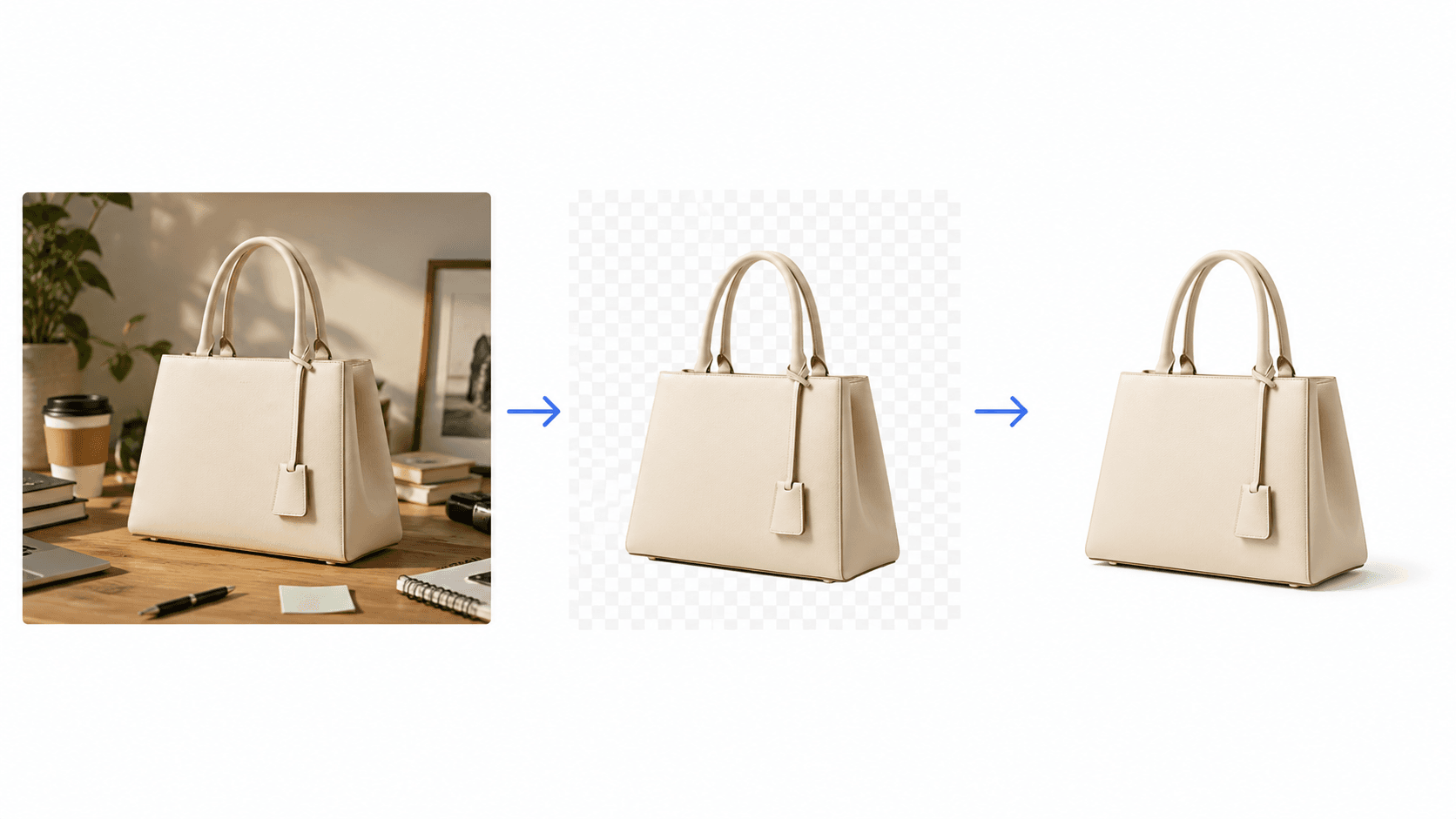
You fix the lighting. You buy a new phone. You retake the shot for the fifth time. The product still doesn't sell.
Here's the part most sellers miss: it was never the lighting.
People Judge Your Product in Milliseconds
Online shoppers don't read your description first. They see the thumbnail, and in a fraction of a second, they decide whether to keep scrolling or actually look closer. That decision happens before a single word registers.
A product photo isn't just "a picture of the item." It's the entire first impression of your brand, your quality, and whether this listing is worth trusting. And a busy, cluttered, or careless-looking background undercuts that impression instantly — no matter how good the product actually is.
A Distracting Background Quietly Kills Trust
Think about the last time you scrolled past a listing without a second thought. Chances are, it wasn't the product that turned you off. It was the context around it — a photo that looked rushed, unpolished, or slightly off.
A distracting background does three things at once:
- It pulls attention away from the product itself
- It signals "amateur" or "side hustle" instead of "established brand"
- It makes shoppers unconsciously question the quality of what they're buying
None of that is fair to the seller. But it's how visual trust works, and it happens before logic kicks in.
Most Sellers Blame the Wrong Thing
When a product photo isn't converting, the instinct is to blame the camera, the lighting, or the angle. So people invest in a ring light. They retake the same shot ten times. They watch photography tutorials.
Sometimes that helps. But often, the lighting and the camera were fine all along — the real problem was sitting in plain sight the entire time: what's behind the product.
The Actual Issue Is Background Clutter
A sharp, well-lit photo of a great product can still fail if the background is working against it. Here's what that looks like in practice:
Shoes on a Bedroom Floor
A sneaker photographed on a bedroom carpet, with a charging cable or a corner of a bed frame creeping into frame, immediately reads as a casual resale listing — even if the shoes themselves are brand new and in perfect condition.
Cosmetics on a Messy Desk
A skincare bottle shot next to a phone charger, a coffee mug ring, and a stack of mail tells the shopper "unboxed at home," not "premium beauty brand." For a product category where packaging and presentation carry a lot of the perceived value, this is one of the costliest mistakes a seller can make.
Electronics With Tangled Cables
A pair of headphones or a small gadget photographed next to a nest of tangled cords looks chaotic before the shopper even registers what the product does. Clutter in the frame competes directly with the product for attention — and clutter usually wins first.
Furniture in a Cluttered Room
A chair or side table shot in a room with laundry, boxes, or unrelated furniture in the background makes it hard for a buyer to picture the piece in their own space — which is the entire point of a furniture product photo in the first place.
In every one of these cases, the product didn't change. The background did all the damage.
Why This Is So Easy to Miss
Part of the reason background clutter goes unnoticed is that sellers stop seeing their own environment. If you've photographed a hundred products on the same desk, that desk stops registering as "background" to you — it's just where you take photos. But a first-time shopper has zero context. They're not filtering out the clutter the way you unconsciously do, because they're not familiar with your setup. To them, everything in the frame is information, and a chaotic frame reads as a chaotic brand.
This is also why so many sellers chase the wrong fix. A new camera or a ring light genuinely does improve sharpness and exposure — but sharpness on a cluttered background just makes the clutter more visible, not less. You end up with a crisper photo of the same underlying problem.
The Fix Doesn't Require a Studio
This is the part that surprises most sellers: you don't need a lightbox, a backdrop stand, or a reshoot to fix any of the examples above. An AI background remover can take the exact photo you already have and strip out everything behind the product, leaving a clean, distraction-free result in seconds.
Here's roughly what happens behind the scenes when you run a photo through a tool like this: the AI model identifies the edges of the main subject — the product — down to fine detail like stitching, fabric texture, or thin cables, and separates it from everything behind it. Instead of a rough rectangular crop, you get a precise cutout that follows the actual shape of the product. That cutout can then sit on a plain white background, a transparent canvas, or a brand-colored backdrop, depending on where the photo is going to be used.
BGRemover.video is built for exactly this. Upload the same phone photo — bedroom floor, messy desk, tangled cables, cluttered room — and it isolates the product, drops in a clean white or transparent background, and gets the shot ready to publish, with no reshoot and no editing software required.
A few things worth knowing if you're doing this for a real catalog, not a single photo:

- Bulk background remover support means you can run batch background removal across an entire folder of product photos in one pass, instead of editing each listing image one at a time.
- Transparent maker mode exports a true transparent PNG, so the same cutout can sit on a white background for one marketplace and your brand color for another, without redoing the edit.
- If you sell with short product demo clips, a video background remover and background blur video option apply the same clean-background fix to video listings, not just static photos.
- It works as a genuinely free background remover online for single images and small batches, without forcing a watermark onto the export.
Before/After: What Actually Changes
The product in each of these pairs is identical. The only variable is the background.
| Before | After |
|---|---|
| Sneaker on a bedroom carpet, cable in frame | Sneaker on a clean white background, nothing else visible |
| Skincare bottle on a cluttered desk | Skincare bottle isolated on transparent background, ready for any listing |
| Headphones next to tangled cords | Headphones alone on a plain backdrop, cable clutter fully removed |
| Chair in a messy room | Chair on a neutral background, easy to imagine in any space |
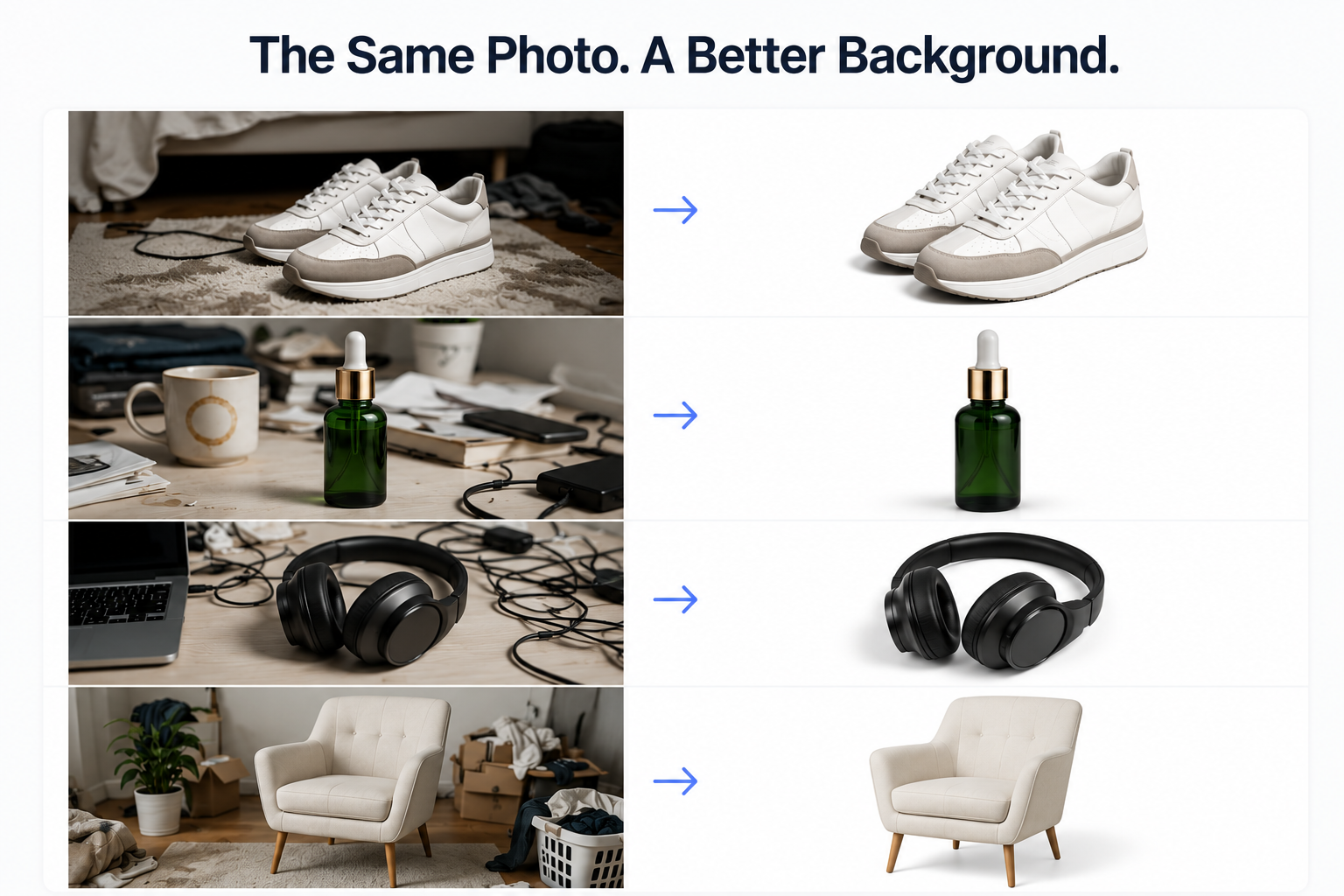
The product doesn't look "edited" or fake in any of these — it just looks like it was actually photographed with intent, because the one thing competing for attention has been removed.
What's worth noticing is that none of these "after" versions required better lighting, a sharper lens, or a second attempt at the shot. The original photo — cable, carpet, coffee ring, and all — was the source material the whole time. The only step in between was running it through an online photo background eraser and letting the AI handle the separation.
Why Marketplaces and Ad Platforms Reward This
There's a practical business reason to fix this beyond first impressions, too. Marketplaces like Amazon and Etsy have listing guidelines that either require or strongly favor plain, consistent backgrounds for main product images — partly because it's proven to reduce return rates and confusion about what's actually being sold. A photo with visible background clutter can get flagged, deprioritized in search results, or simply outperformed by a competitor's cleaner listing sitting right next to it in the grid.
The same logic applies to paid ads. A scroll-stopping ad still needs the product to be instantly legible in a fraction of a second, and a plain or on-brand background does more of that work than most sellers give it credit for. Cleaning up the background isn't just a cosmetic upgrade — it's a small technical fix with a direct line to click-through rate, return rate, and how a marketplace's own algorithm treats the listing.
Practical Tips for Cleaner Product Photos Going Forward

- Shoot against the plainest surface you have access to — a wall, a table, even a bedsheet — since a plain starting background gives any AI background remover a cleaner edge to work with.
- Keep the product centered and fully in frame. Cropped edges are harder to clean up automatically than a background that's simply busy.
- Batch your shoots, then batch your edits. Take all the product photos for a listing (or a whole catalog update) in one session, then run them through a bulk background remover together, instead of editing one photo, publishing, then coming back for the next.
- Use a transparent export if you sell in more than one place. A transparent background maker output means the same cutout can be dropped onto a white background for one marketplace and a branded color for your own site, without re-shooting or re-editing.
- Don't skip video listings. If your product has a short demo clip, running it through a video background remover or applying a background blur video effect keeps it visually consistent with your clean product photos.
- Check for consistency across your whole storefront, not just one listing. A single clean photo next to nine cluttered ones still looks unfinished. Consistency across every listing is often what separates a store that feels established from one that feels like a side project — and it's exactly what a bulk background remover is built to deliver at scale.
A Quick Gut Check for Your Own Listings
Before you assume your photos are fine, try this: pull up your current product photos and cover the product with your hand or a piece of paper. Look only at what's left in the frame. If what remains looks messy, mismatched, or like a random corner of a room, that's exactly what a shopper's eye is picking up on too — even if they're not consciously aware of it. If it's genuinely plain and clean, background clutter isn't your issue, and it's worth looking elsewhere for what's holding back conversions. But for most sellers who haven't done this check before, this exercise is the moment it clicks.
Frequently Asked Questions
Why do product photos with cluttered backgrounds hurt sales?
Buyers form a judgment about a product in milliseconds. A messy or distracting background reads as unprofessional and untrustworthy, even if the product itself is great, which pushes shoppers to scroll past or bounce before they even read the description.
Do I need a professional studio to fix this?
No. An AI background remover like BGRemover.video can strip a cluttered background from an existing phone photo and replace it with a clean white, transparent, or branded backdrop in seconds — no lighting kit, backdrop, or studio required.
What's the fastest way to clean up an entire product catalog?
Use a bulk background remover instead of editing images one by one. Tools like BGRemover.video support batch background removal, so you can upload a whole folder of product photos and get consistent, clean-background results across every image in one run.
Can I get a transparent background instead of a solid color?
Yes. A transparent maker mode removes the background entirely and exports a transparent PNG, which is useful if you want to place the product on different colored backgrounds later, like a marketplace listing versus your own site.
Is there a free background remover online that doesn't add a watermark?
Many free tools cap resolution or force a watermark. BGRemover.video's free plan supports watermark-free exports for single images and small batches, which matters if you're publishing straight to a live store listing.
Does this work for video product listings too?
Yes. BGRemover.video also includes a video background remover and background blur video option, so product demo clips and short-form video listings can get the same clean-background treatment as photos.
Conclusion
The next time a product photo isn't converting, resist the urge to blame the camera or buy another lighting setup. Look at what's actually behind the product first. In case after case — shoes on a bedroom floor, cosmetics on a messy desk, electronics tangled in cables, furniture in a cluttered room — the product was never the problem. The background was.
The fix doesn't require a studio, a reshoot, or hours in editing software. BGRemover.video turns the photos you already have into clean, professional-looking listings in seconds — as a single-image AI background remover, a bulk background remover for full catalogs, and a video background remover for product clips, all in one place.
Try it on your own product photos at bgremover.video — the free plan is enough to see the before/after difference for yourself.
Related Resources
- BGRemover.video: Image Background Remover
- BGRemover.video: Bulk / Batch Background Remover
- BGRemover.video: Video Background Remover
- More guides on the BGRemover Blog
- Best AI Background Remover 2026: I Tested Every Major Tool
- Best Video Background Removers in 2025
- Remove Video Backgrounds 100% Automatically with AI
- Bulk Video Background Remover Online